Alert Three 2022
MENU
The newest post and image entries are on top of the page. Scroll from the bottom upwards to follow the flow status timeline of the Ruaha River per location
Zero Flow at the Park Headquarter is expected early in the year around mid-August 2022 The zero flow period at the Ruaha Park HQ will be probably be a long zero flow period starting already early in the Ruaha low flow season.
Analysis of the flow status at Msembe Bridge through comparison with earlier low flow series (2018) predicts the first zero flow between 7 to 17 days from today (August 6, 2022)


Alert 3 starts from July 30, 2022 drainage less than 8 cumecs at Nyaluhanga

Alerts one and two 2022
Second Alert defined as the first day of zero flow in the Ruaha River at Mtera is assessed between July 12 and July 17 2021. This last date is selected for Alert Two. Check below the flow status on respectively July 17, 2022 (Alert Two) and on July 12, 2022 as the flow nears zero flow.


The First Alert for the Rufiji Basin Water Office to start following the water use in Kapunga and Ifushiro is announced on June 12, 2022


Suspected Zero Flow Mbarali December 4, 2022
MENU
The newest post and image entries are on top of the page. Scroll from the bottom upwards to follow the flow status timeline of the Ruaha River per location
While images with cloud covers blocked the view and suggest rains, the images below downstream (3.3km) of the New NAFCO Headworks at Mbarali suggest zero flow on December 4, 2022. With a resolution of 5m/px flow may still be present without sentinel able to capture the near to zero flow.


Usangu Drainage Contribution Mbarali ceased
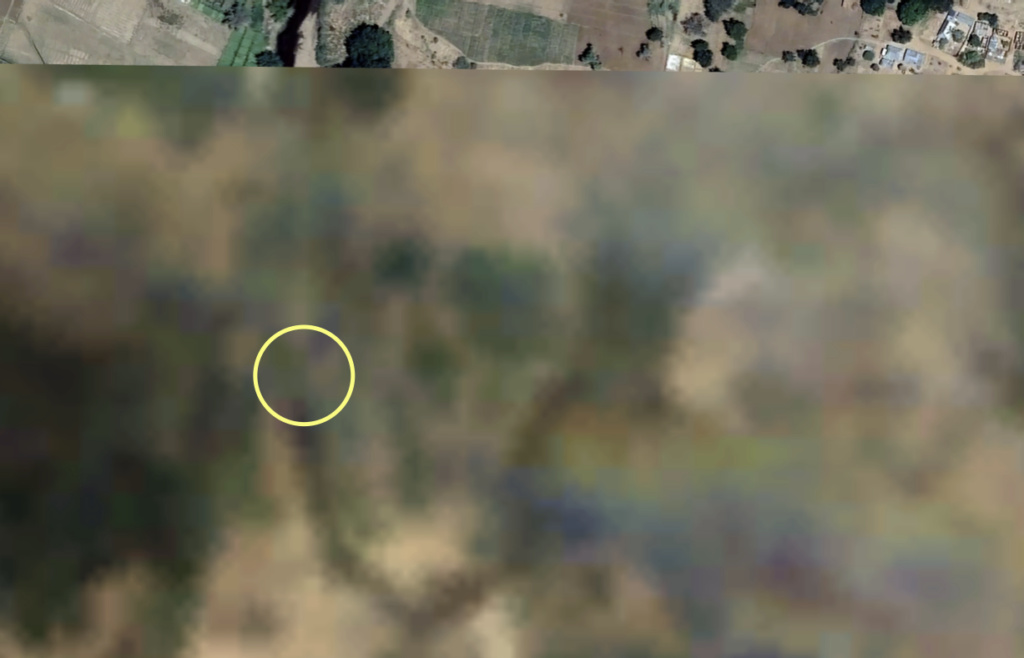
At the confluence of the Ruaha River and the Mbarali River in the Ruaha National Park, the drainage from the Mbarali River has ceased. You can compare the 10m/px sentinel image of September 3, 2022 with the high resolution image of November 15, 2011 where you can find the exposed sediments of the riverbed inside of the yellow circles.
Contribution Mbarali River to Drainage Usangu almost Nil


Overflow at New NAFCO Mbarali zero to near zero August 19, 2022
For the analysis of the near infrared image (5m/px) at New NAFCO weir visit this link.

Overflow Status Mabarali New NAFCO Weir August 2022
The Estimated Flow in the Mbarali on August 6 2022, is more than 2 cumecs, based on the RS analysis. Two cumecs is the assumed minimum diversion flow to the Mbarali Hydro-Power Station, Town and Irrigation Scheme. The remainder of the flow in the Mbarali river is the overflow over the weir. The return canal is also holding water (see image) and 1 cumecs is the regulatory discharge in the drain to be returned to the Mbarali main channel. The discharge cannot be verified remotely by the Ruaha Monitor Tool. The absence of return flow and approximate full drain can be assessed remotely during the low flow period in Mbarali River. For details about the remote assessment visit the related page.


Flow Status Mabarali New NAFCO July 2022
End of July the overflow at the weir in the Mbarali River at the new NAFCO intake still exceeds an estimated 2cumecs. The overflow is reflected by the turbulent whitish overflow section of the weir.


Increased River Flow abstracted no overflow Ihefu
MENU
The newest post and image entries are on top of the page. Scroll from the bottom upwards to follow the flow status timeline of the Ruaha River per location
The considerable increase of irrigated area on January 2, 2023 as compared to the December 17, 2022 irrigated area is enabled by the first rains allowing more abstraction from the Mbarali and Ruaha Rivers (green and light blue colors in irrigated area). On the same day as the NBR composite image below (Landsat 8) of January 2, 2023 the drainage from the Usangu Rice Plain together with possible supplies from tributaries does not suffice yet to reach the N’giriama outlet of the Ihefu swamp.

Increased Rice Irrigation from the two main diversion weirs at Kapunga (Ruaha River and New NAFCO (Mbarali River) respectively the left and right highlighted (white) areas on the image below, seems to benefit from the increased flow in both rivers while the Drainage flow from the Usangu Rice Plain does not suffice to cross the Ihefu Swamp.

Usangu Rice Plain experiences very dry season 2022
It is expected that there is some more water in the Ruaha but still inadequate to launch the rice irrigation season. The 1 to 2 cumecs abstracted in Usanga for selected group of farmers (light blue and tones of green) in the highlighted (redish) Kapunga Commercial Farm would boost drainage to the water starved Ruaha National Park.


Start Zero Flow Period Park HQ 2022 – 2023
With the start of zero flow period at Msembe Bridge (Park HQ) irrigation and spill in the Usangu Rice Plain is due to the low flow limited to mostly spill. The Kapunga Smallholder and Kapunga Commercial Scheme have been indicated and to the west spill in the uncontrolled canal network of Ifishiro also low areas with spill can be detected on August 21, 2022.


Usangu Diversion and Spill August – July 2022
The use and spill of river water during the low flow period in the Ruaha River at Kapunga and Ifishiro Rice Plain and Diversion of the Mbarali River at New NAFCO Intake is monitored. The Ruaha Flow Monitor finds Irrigation and Spill hotspots and the authority will need to follow up on these hotspots. In case irrigators do not have the required permit to abstract or spill is the result of neglect both losses will be easy to recover for drainage to the park. Increased drainage during the critical low flow period (Three Alert Phases) will prevent or reduce the period of zero flow in the Ruaha Park (Park Headquarter).
With very limited time left to boost drainage before it is too late to prevent zero flow at the Park HQ, which will start within one to two weeks from now (August 11, 2022), limited resources are left, to adequately improve the low flow in the Ruaha River in the Park. Early drainage increase measures (during Alert One) will be required to delay the start of the zero flow period. With timely start of the rains and timely start of drainage management measures, zero flow can be avoided. On August 4, 2022 some spill hotspots are demonstrated using RS. (see two images below for August). For more details about the tracking down of (uncontrolled) Irrigation, Spill and Riverine “losses” click here.


Irrigation and Spill with Alert 3 announced on July 30, 2022
Currently (July 2022) an irrigated area in the Ifushiro section of the Ruaha should be questioned already deep into the alert (phase) 2 and on the day alert alert (phase) 3 is announced.
Water is supplied by a branch of the Ruaha.


The practise of having water in the drainage system of the major rice schemes can be considered as loss as long as this water is not return flow to the Ruaha or Mbarali Rivers. Even if it the drains are used to return water to the main river channels abstraction of water from the drains should be avoided. Not only is registration and management of such diversions difficult, it also provides a precedent for illegal use of water by others. These “informal improvisations” in the system can often be associated with spill especially in the Ifushiro area where natural depressions, are likely to fill and become hotspots for spill each low flow season.


Drainage Flow Returns November 12, 2022
MENU
The newest post and image entries are on top of the page. Scroll from the bottom upwards to follow the flow status timeline of the Ruaha River per location
Drainage flow on November 12, 2022
After some two months of zero drainage at the Nyaluhanga – Ihefu Swamp section of the Ruaha River drainage flow has returned on November 12, 2022. Compare the two images below, at the same section of the Ruaha approximately 13km (as the bird flies) downstream of the Nyaluhanga Gauge Station.


Zero Drainage September 5, 2022


Usangu Plain Still Drains water in the Ruaha River September 18, 2022
Still some Drainage flow from the Usangu Rice Plain is entering the Ihefu Swamp concluding from the drifting reet fields. Compare the images at the entrance of the Ihefu Swamp of the Ruaha River on September 3, 2022 and the same section on September 18, 2022 below. The circles enclose the reet fields which have moved downstream in the period between 3 to 18 September 2022. In this period thre new reet fields formed in this section of the Ruaha River.


Nyaluhanga Usangu Drainage, Start Alert 3 on July 30, 2022
The Drainage from the Usangu Rice Plain which results in zero as soon as it drops under a critical value, is monitored at the confluence of the Mbarali River and Ruaha River and downstream at Nyaluhanga gauge station up to the entrance of the Ihefu Swamp. Alert Three starts as soon as the water level drops under approximately 8 cumecs and little time is left to boost the drainage further to delay the start of the zero flow period at the Park HQ.


Low Flow Drainage 2022


The newest post and image entries are on top of the page. Scroll from the bottom upwards to follow the flow status timeline of the Ruaha River per location

Surface overflow advancing to Park HQ
The surface flow in the Ruaha River between N’giriama and Msembe (Park HQ) slowly advances. On January 8, 2023 there is still a section of the river 21.3km upstream of the Msembe Bridge with zero flow from the Ihefu Swamp while water supplied from local cachments already flows under the bridge.

The overflow from Ihefu Swamp still did not reach the Park HQ on January 6, 2023 (see image below) while flow downstream of the inlet at the Park HQ continued at least on January 3, 2023.

Zero Overflow Ihefu Continues in 2023
On January 2, 2023 zero overflow from Ihefu swamp continues, according to Landsat 8 image of same section of the Ruaha River as the Sentinel-2 image below of December 17, 2023. The Ruaha River section is 9.7km downstream from the N’giriama Sill (as the birds flies).


The drainage from the Usangu Rice Plain is still not adaquate on December 17, 2022 to reach the outflow of the Ihefu Swamp, although abstraction for rice irrigation seems to increase according to the expanded inundated area at the two main irrigated schemes on the Usangu Rice Plain

Although cloud cover suggest the arrival of the rains Overflow of Ihefu Swamp still absent on December 12, 2022 concluding from the isolated pools 7.3 km downstream (as the birds flies) of the Ngiriama Outlet.

The previous post (below) with hope for return of the overflow from the swamp proves futile on December 7, 2022 with suspected traces of growing pools of water (trickle surface flow) 11 km downstream of the N’giriama Sill Outlet of the swamp vanished on December 7, 2022. Compare images on both dates below.


Trickle of Overflow Ihefu Swamp
The modest rains which started November 2022 have increased the flow in the Ruaha River which has now passed the Ihefu Swamp and trickle over the N’giriama Sill at the out let. This is concluded from the “Land and Water” composite of Sentinel-2 bands (20m/px) which show growth of the pools 11km downstream of N’giriama. The first image below is from November 29, 2022 and the second is taken with zero overflow from the swamp on November 17, 2022. The trickle at N’giriama is not yet enough to reach the Park Headquarter 63km downstream (as the bird flies).


Zero Overflow Ihefu Swamp
The rains mid-November 2022 which were adequate to get the drainage from the Usangu Rice Plain flow again, have not been adequate for overflow from the Ihefu Swamp, concluding from the November 17, 2022 satellite images (below). The zero (over)flow from the swamp is demonstrated by the image from the Ruaha River section, some 40km downstream of the N’giriama Outlet.

Burned Ihefu Swamp November 2022
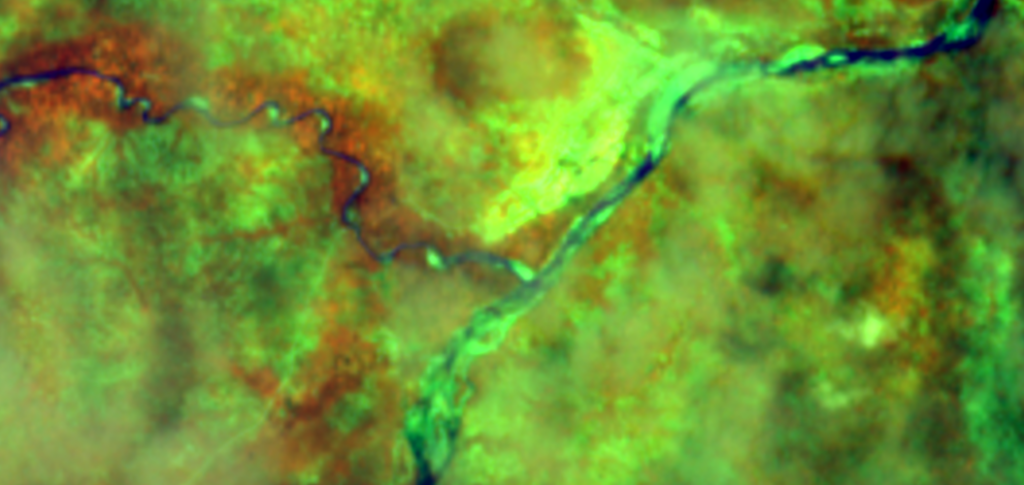
Every year with the reduced, to zero inflow, in the swamp, the vegetation is burned. With the bare plains and inadequate fodder for the herds it is probably the cattle owners, who burn the swamp vegetation for regrowth of grass. Compare the infra red image below with the NBR composite image immediately following.


Overflow Ihefu Swamp receding to N’giriama
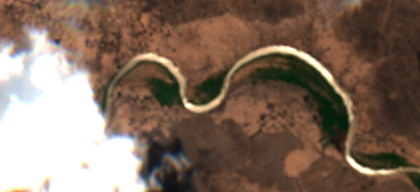
The recession of the surface flow of the Ruaha which started some 222km downstream as the Ruaha River dried at Mtera mid-July 2022 has now reached the N’giriama Sill on September 18, 2022 some two months later. The high resolution image of the Ruaha River 7.5km downstream of the sill of August 23, 2021 still shows some overflow over the sill which is in the south. The three channels draining water from the pool at the bottom of the image. The next sentinel-2 image of September 18, 2022 with 5m resolution suggests the channels do not hold anymore water or very minor flow.


With zero flow 2 kilometers upstream of the Msembe Bridge (ParkHQ) on September 5, 2022 the Ruaha surface flow has now receded between N’giriama and the Idodi VDAS 40 km upstream of the N’giriama Sill.


Zero Flow at Ruaha Park HQ on August 21, 2022
Zero flow is assessed at the Ruaha Park HQ on August 21, 2022. The related image is found here
Zero Overflow N’giriama not yet stable 2022
In the absence of a clear remote observation of zero flow at the Msembe Bridge the flow status of the overflow from Ihefu is checked on August 16, 2022 and flow reduction between August 11, 2022 and August 16, 2022 is not observed in this period.


Overflow N’giriama becomes zero 2022
The overflow from the Ihefu swamp at the N’giriama Sill is currently measured by the Ministry of Natural Resources and Tourism. The flow monitor monitors extremely low flow and zero flow to verify the predictions and observations at downstream VDAS locations. And to timely alert the authority based on the flow status on the ground.
The flow at the N’giriama bedrock which dams the drainage water from Ihefu like a weir, is searching channels in the rock to rush down the slope. The high resolution image below is taken on August 23, 2021. The small turbulent passage compares with the 10m/px near infrared image one day later. Zero flow that year kicked-in on November 15, 2021. Assessment of the relation of the flow at the N’giriama Sill and the downstream VDAS at idodi and ultimately the zero flow at Msembe Bridge (Park HQ) in 2021, reveals that as expected zero overflow from the Ihefu Swamp will reduce due to “natural losses” and dry (zero flow) first close to the Msembe Bridge first. At the same time still a trickle will may overflow from the swamp and at some sections where subsurface flow adds up to the Ruaha River flow.


Overflow Ihefu at Idodi Section Ruaha

Overflow Ihefu January 21, 2023 still critically low
MENU
The newest post and image entries are on top of the page. Scroll from the bottom upwards to follow the flow status timeline of the Ruaha River per location

Overflow Ihefu Swamp reaches Jongomero Confluence
Compare the flow in the Ruaha at confuence with Jongomero River as overflow from Ihefu Swamp reached on January 16, 2023.


Local Rivers sustain flow Ruaha Park HQ since December 24, 2022
With most of the run-off from the rains in the upper reaches of the Ruaha and Mbarali Rivers diverted for rice irrigation on the Usangu Plain, the flow at the Park Headquarter seems to be sustained by locale rivers in the Ruaha Park on January 11, 2023

Flow returns at Msembe Bridge (Park HQ) December 24, 2022
Flow at Msembe Bridge sustained by local rains with no drainage from Usangu Rice Plain reaching the Park HQ on January 2, 2023. Without overflow from Ihefu swamp the Ruaha River can dry again at the Park HQ.


Ruaha River Flow Monitor Tool (Remote Sensing) Zero Flow Period 2022 around 124 Days at Ruaha Park HQ
The flow at the Ruaha Park Headquarter returned after three months of zero flow between December 19 and 24, 2022.


Zero flow period almost three months


End Zero Flow Ruaha predicted January 19, 2023
MENU
The newest post and image entries are on top of the page. Scroll from the bottom upwards to follow the flow status timeline of the Ruaha River per location
Flow Ruaha River at Mtera confirmed

Considering the advance of the surface flow in the Ruaha River on January 18, 2023 (image below) the zero flow period for the river between the source and the Mtera Reservoir will end on January 19, 2023.

Advancing surface flow Ruaha River not yet at Mtera
With the departure of the clouds (see image below of December 29, 2022) the advance of the surface flow from the Ruaha River is located some 47.5km upstream of the Mtera Alert Two virtual remote sensing station.

On December 29, 2022 the surface flow in the Ruaha has not yet reached Mtera (20km upstream of reservoir).

Due to the cloud cover on December 26, 2022 the advance of the surface flow front in the Ruaha River cannot be traced between Msembe Bridge and Mtera. From the Landsat 8 image it can be concluded that the zero flow period at Mtera has not yet ended.

Recession Surface Flow Ruaha some 200km from Mtera
On December 1, 2022 the surface flow in the Ruaha River as it flows out of the park has dried even upstream of the Msembe Bridge. But with the ongoing rains of November and early December 2022, the flow is expected to reach the Ruaha again at the Park HQ (Msembe Bridge) soon.

Flow Out Of Park and Mtera 2022
For conclusions on the impact of the changed flow regime of the Ruaha River on the aquatic life and other dependent species like wildlife and riverine vegetation and ultimately the impact on the communities who make use of the River, the flow monitor will assist in description and classification of the river flow, pool occurrence and duration and periods of zero flow. The handbook : “Intermittent Rivers & Ephemeral Streams: What water managers need to know” financed by the European Union considers some basic monitoring requirements for managing ecosystems impacted by a changing river regime.
It is remotely observed that with zero flow occurrence at the Park Headquarter at Msembe Bridge a (subsoil) flow is still continuing downstream of the bedrock at the bridge. This continued trickle will continue to refresh the pools in the riverbed used by the Hippopotamus population during the low flow period and reduce the risk of the deadly anthrax 25. For short zero flow periods the risk of anthrax break out is expected to be smaller than during long periods of zero flow in the park.
The Flow Monitor can assist in preventing or reducing the period of zero flow.


In 2016 Keenan Stears and his team studied26. the behavior and ecology of hippopotamus in the Ruaha Park in response to the reduced (zero) flow in the river. The GPS tracked animals were monitored. (see image below). The occurrence of anthrax possibly linked to the reduced flows further expanded their research. It will be interesting to investigate the length of the zero flow period or even its absence on the impact on aquatic life including the hippopotamus population.

Pool Status Monitor Zero Flow Period 2022


The recession of the flow out of the park from Mtera towards Msembe at 40km downstream of Park HQ.
In 2021 the recession of the reducing outflow in the Park, after drying at Mtera, showed drying of the Msembe to Mtera section of the Ruaha River. In three month time the front of the drying river retreated some 100km (as the bird flies) between Mtera Reservoir and the Msembe Bridge (Park HQ). Zero Flow at Mtera (Alert One) was observed on August 31, 2021 and the image of the dry Ruaha Riverbed with unconnected pools over the 100km stretch taken on December 29, 2021. The flow returned on January 3, 2022.

On August 11, 2022, the day the Ruaha dried 2km upstream of the Msembe Bridge (Park HQ) the recession of the surface flow downstream of the Msembe Bridge has reached 40km from the bridge. In a period of almost one month since the Ruaha dried at Mtera.

Alert Two at Mtera July 17, 2022
The first observation of zero flow at the virtual drainage assessment station (VDAS) used for detecting the flow status of the Ruaha River at Mtera is on July 17 2022.

The flow pattern from flow in the Ruaha to zero flow at the VDAS has changed in 2022. Visit the 2021-2022 pattern here which pattern has been steady for a number of years.
Below you can see the drying of the Ruaha close to the Mtera Reservoir and upstream of the confluence with the Little Ruaha River in a sequence of three images with newest image on top. (click images to enlarge)


The Flow in the Ruaha at Alert One June 12, 2022
The NBR composite image gives an impression of the natural and irrigated crop “losses” (Dark green, green and dark blue) at the time Alert Phase One starts. There is adequate water in the system to boost drainage to the Ruaha National Park to delay the zero flow at the Park HQ.

First Alert at Mtera June 12, 2022
The First Alert for the Rufiji Basin Water Office to start following the water use in Kapunga and Ifushiro is announced on June 12, 2022.